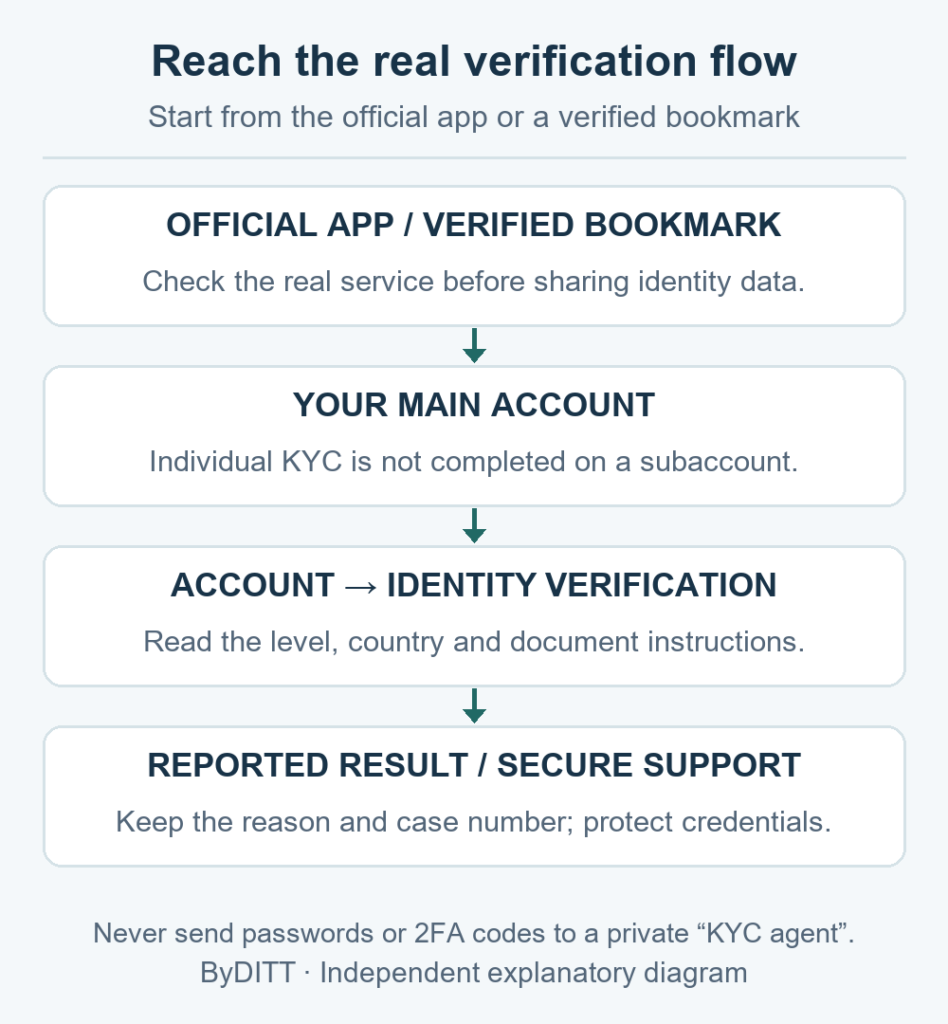
Bybit Security and Scam Prevention 2026: Verification and Incident Response
Review account protection, impersonation checks, incident reporting and custody risk. Includes the February 2025 breach as a case study, not a guarantee of present safety.
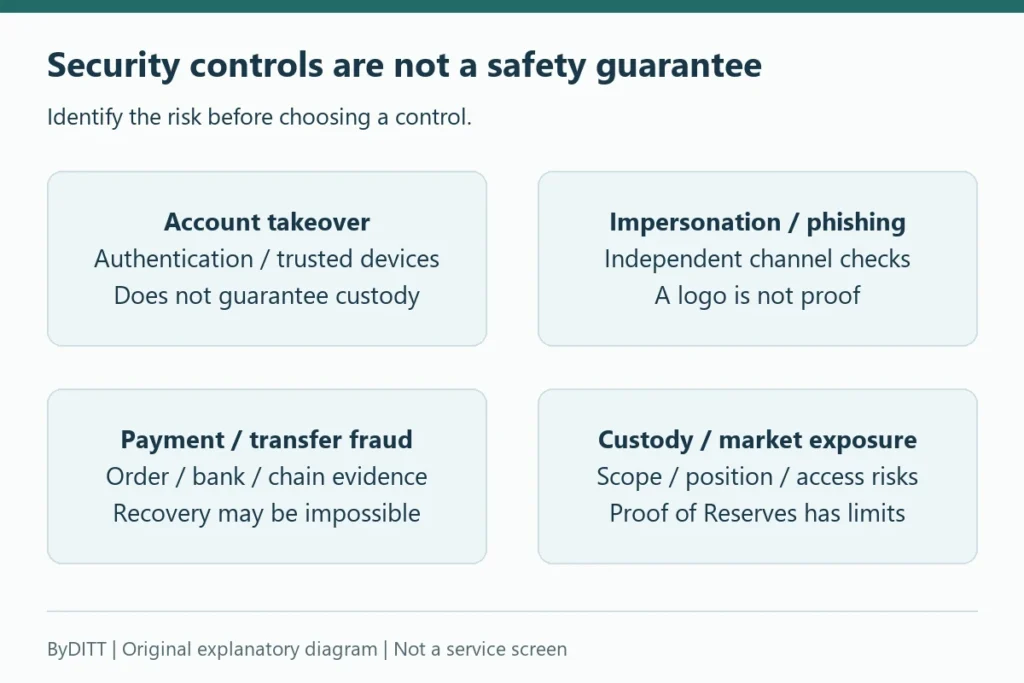
Review account protection, impersonation checks, incident reporting and custody risk. Includes the February 2025 breach as a case study, not a guarantee of present safety.
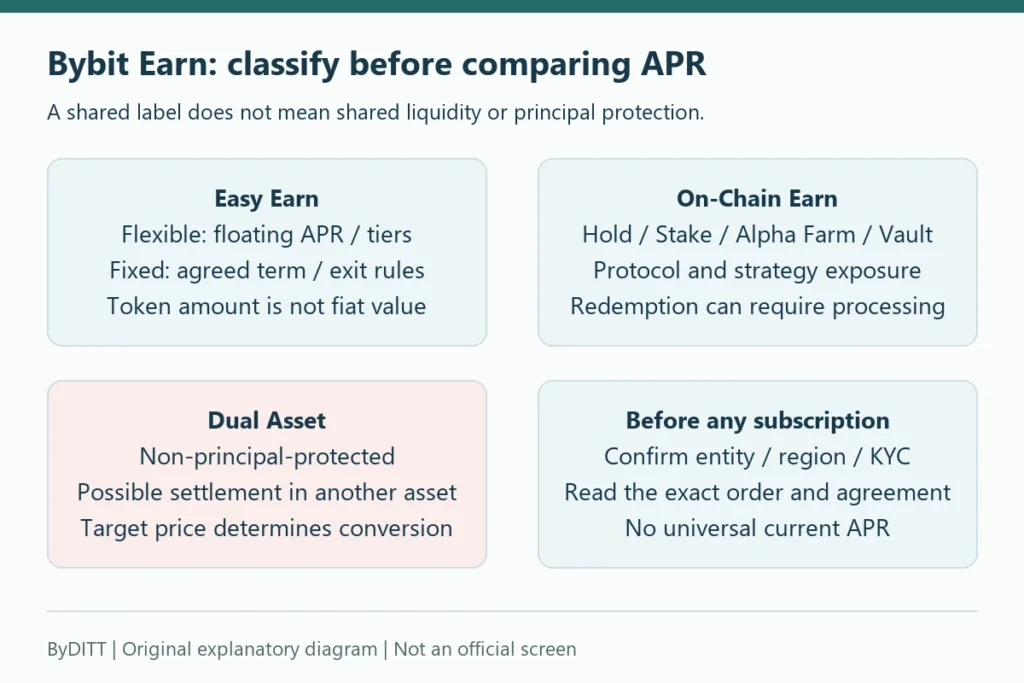
Compare Bybit Earn products by liquidity, APR, settlement method and loss exposure. Worked examples explain why displayed yield does not guarantee a positive overall result.
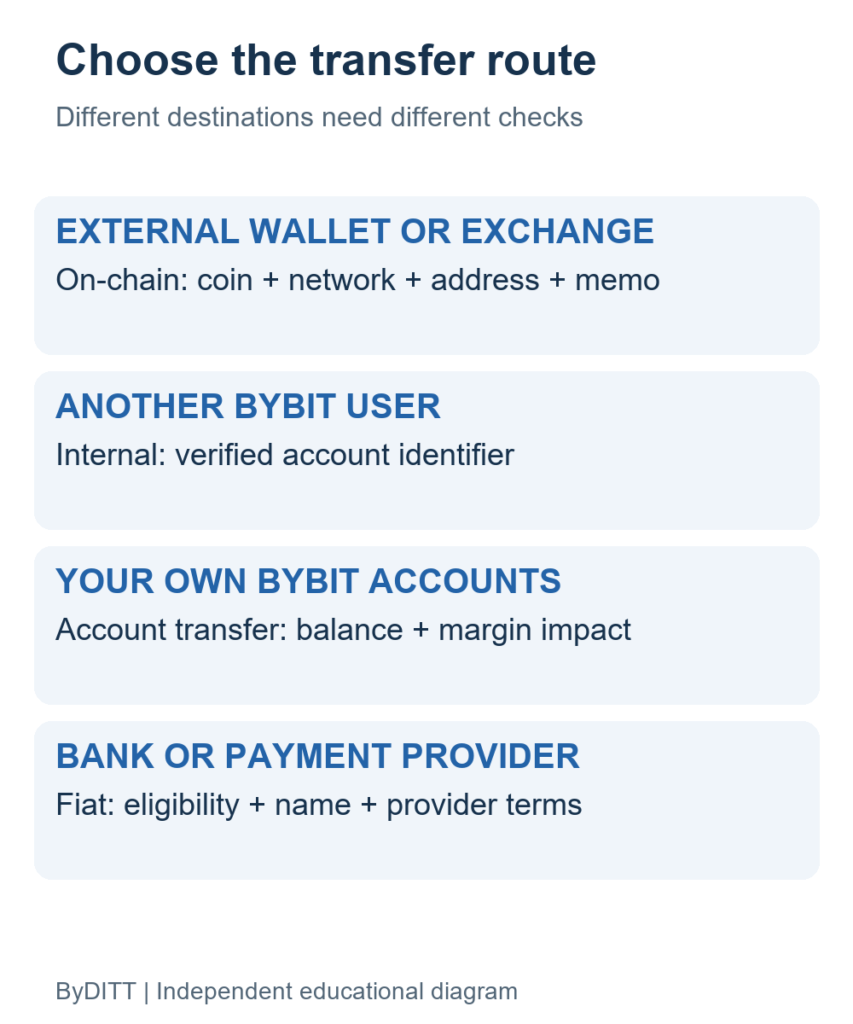
Check Bybit USDT deposit and withdrawal networks, fee deduction modes, net amounts and test-transfer minimums. Includes worked examples and official sources.
Examine Bybit AI Hub permissions, confirmation safeguards and API security. Learn why prompt design and subaccount boundaries do not eliminate trading or custody risk.

Check what BYBITDC identifies, which missing-code cases need verification and how to confirm actual account fees. Separate referral attribution from discounts and campaign rewards.

Understand Bybit futures contracts, margin, trading fees, funding and liquidation risk. Use position-size and order checks rather than treating a fee benefit as risk protection.

How to sign up for Bybit: check regional eligibility, account identifiers for email, phone and supported third-party methods, KYC, security and actual fees. Verify BYBITDC and displayed conditions separately.
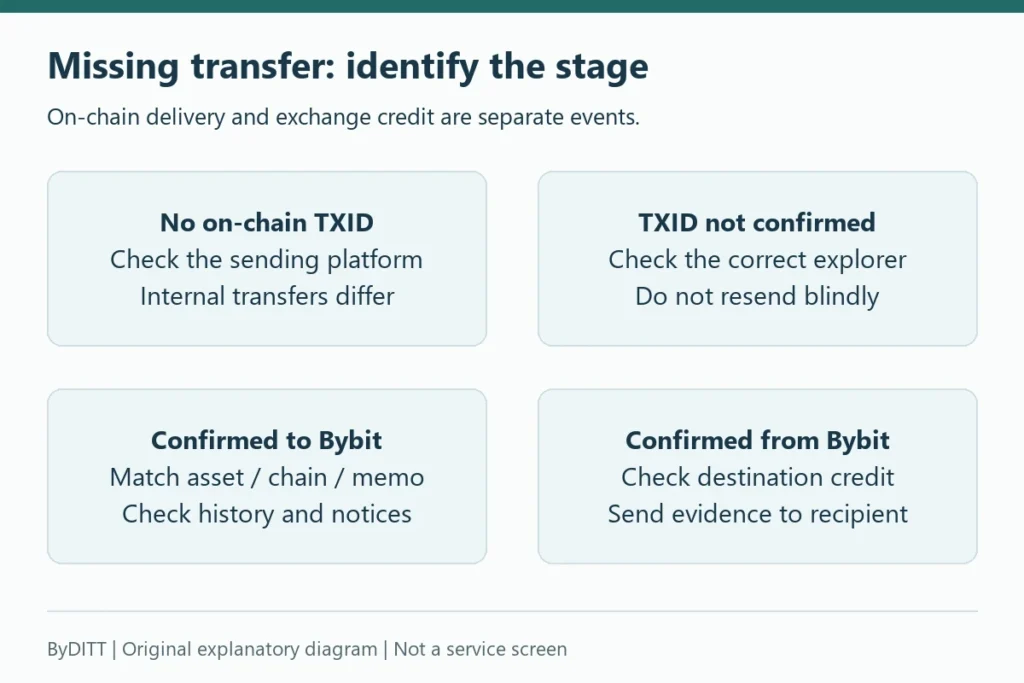
Identify whether a missing transfer is unbroadcast, awaiting confirmation or delayed at a receiving platform. Follow network, memo/tag, fee and official-support checks before resending.
Last reviewed: October 25, 2026. “Self-referral” usually means controlling another account so your own activity generates referral rewards or commission.

Bybit KYC troubleshooting: check identity and address documents, understand rejection reasons and review delays, and contact official support safely.