A Bybit OCO stop loss can be canceled when the paired conditional limit order triggers, even if that limit order has not filled. Check the surviving order and actual executed quantity before assuming your asset was sold or submitting a replacement.
Reviewed: September 14, 2026. This is a Spot-order troubleshooting guide, not a trade recommendation. Product rules and account availability may change.
The OCO rule that explains the missing stop loss
Bybit’s OCO documentation describes two linked price conditions. Once one direction triggers, the opposite condition is canceled. A conditional limit instruction then waits for an executable price; triggering alone is not a completed trade. OCO is documented for Spot and Spot Margin, not as a universal derivatives setting, and the documented OCO feature is unavailable through the API. Official OCO rules.
The practical distinction is between an instruction and an outcome. A green profit-taking label is not proof of a sale. Read the execution record before deciding what exposure remains.
A worked example: triggered, but still holding the asset
The following is a hypothetical illustration, not live pricing. Assume a trader holds 1 ETH and uses an upper take-profit trigger of 3000 USDT with a sell limit of 3010 USDT, plus a lower stop-loss condition. Price touches 3000 USDT, but no buyer matches the 3010 USDT sell limit. The triggered limit can remain open while the paired stop has already been canceled.
If only 0.4 ETH eventually sells, the unsold amount in this simplified example is 1 minus 0.4 = 0.6 ETH, before any asset-denominated fees or other balance changes. A screenshot of the trigger is therefore insufficient: record the actual filled quantity, open quantity and wallet balance separately.
Bybit’s Spot TP/SL documentation also warns that an attached limit take-profit can trigger and cancel its paired stop before filling. It distinguishes assets reserved at placement for TP/SL from assets reserved at trigger time for conditional orders. Minimum size and symbol price restrictions can affect placement or execution. Official Spot TP/SL documentation.
Check these records before placing another order
Bybit directs users to Open Orders and Order History, or UTA Orders → Spot Orders → Current Orders / Order History. The checklist below is BYDITT’s independent troubleshooting method, not a promise that Bybit will restore an order.
| Record to inspect | Question to answer | Why it matters |
|---|---|---|
| Account and trading pair | Am I viewing the intended account, asset and Spot market? | A different account or market can make an order appear missing. |
| Original order details | Was this OCO, attached TP/SL, or a separate conditional order? | Do not diagnose different instructions as the same product. |
| Trigger and cancellation times | Did the opposite leg cancel when its partner triggered? | Build a timeline instead of relying on the latest status alone. |
| Executed quantity | How much actually traded, and at what average price? | Separate partial execution from a complete exit. |
| Open orders and balance | What remains outstanding or reserved? | A replacement must account for surviving instructions. |
| Rejection details | Does the history show a specific reason? | Save the exact message for support; do not guess from a chart. |
Market versus limit: choose the failure you can tolerate
A limit controls the acceptable execution price but can leave exposure open. A market instruction prioritizes available execution rather than an exact price. Neither is a guarantee against losses.
Do not assume a separate Slippage Tolerance setting protects an OCO order. Bybit’s current slippage guide explicitly excludes OCO, conditional and trailing-stop orders from that feature. For supported ordinary market orders, it can restrict the permitted price range, with unfilled amounts outside that range canceled. Review the actual order ticket rather than transferring a setting mentally from another order type. Official Slippage Tolerance guide.
When the history does not explain the result
Save the account type, trading pair, order identifiers, timestamps with time zone, trigger price, limit price, executed quantity and cancellation message. Compare these records before editing anything. If they do not reconcile, contact Bybit through its official support channel. Redact balances and identifiers before sharing screenshots publicly, and never share passwords, API secrets or recovery codes.
Repeatedly submitting replacement orders is not a diagnostic method. First identify which instructions remain active and which quantity you actually intend to manage. This article does not direct you to buy, sell or cancel a particular holding.
Fees and access for Korean and global readers
OCO does not establish your personal fee discount. Bybit’s fee schedule directs users to their logged-in My Fee Rate page after identity verification because actual rates can vary by region. Check the applicable market and account terms instead of applying a headline rate from another product. Official trading fee structure.
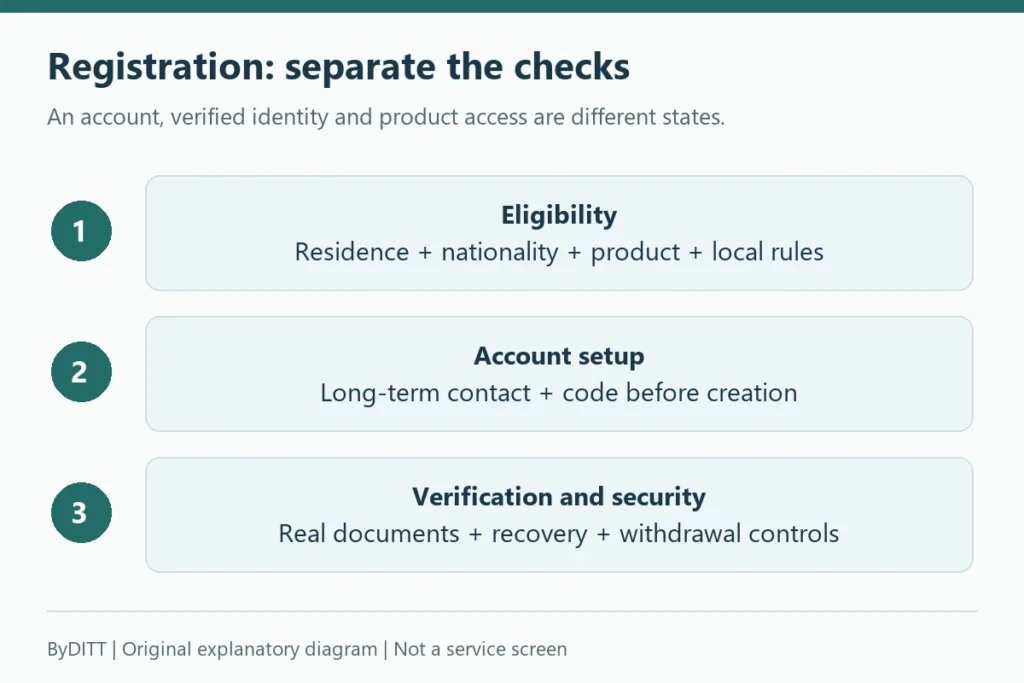
A translated guide is not evidence of permission to use a service. Korean-speaking and other international readers should verify their residence, account entity and current product eligibility. Do not misrepresent location or use this guide to bypass restrictions. Bybit’s restricted-jurisdiction terms can change and allow account action for false location representations. Official service restrictions.
Related reading and optional registration
For the wider vocabulary, see our Bybit order-types guide. For jurisdiction and account-access questions, see our Bybit country-access guide.
If registration is appropriate for your circumstances, review the official registration screen with BYBITDC. Confirm the displayed code, account-specific fees, campaign terms and eligibility before signing up. No fixed discount or reward is promised here.
Frequently asked questions
Does a canceled stop prove that the asset was sold?
No. Confirm actual fills and remaining assets. A status attached to one instruction does not describe your complete account exposure.
Should I immediately create the same OCO again?
Not without reconciling active instructions and remaining quantity. Use the checklist first; seek official support if the records are inconsistent.
Does this also explain every futures stop-loss failure?
No. This article addresses Spot OCO and related Spot TP/SL behavior. Futures require their own trigger, margin and liquidation checks.
Sources, independence and risk
The five official Bybit documents linked above were reviewed on September 14, 2026. The worked example and diagnostic checklist are BYDITT’s independent explanation; they are not an account test or an official support decision. Recheck current documentation and your live order details.
Affiliate disclosure: BYDITT is an independent educational and affiliate site, not Bybit.com. We may receive compensation from eligible activity through BYBITDC. This creates a financial conflict of interest and does not guarantee lower fees or favorable execution.
Risk disclosure: Crypto trading involves market, liquidity, slippage, custody, counterparty, technology and regulatory risks. Spot Margin and other leveraged products add borrowing and liquidation risk. An order control cannot guarantee execution or prevent loss. This is not investment, legal or tax advice.