A Bybit Spot trailing stop has separate activation and execution stages: reaching the activation price starts tracking, while the specified retracement triggers a market order. It does not promise a fill at either displayed price. If your order appears inactive or has not filled, identify its stage before replacing it.
Verified: September 16, 2026. This guide combines Bybit documentation with independent BYDITT examples and an order-review checklist. Product rules and access can change.
Activation price is not your sale price
Bybit describes an optional activation price. Without one, tracking starts immediately from the current Last Traded Price (LTP). Once active, a sell order follows the highest observed price; a buy order follows the lowest. Retracement can be an absolute distance or a percentage. The resulting trigger submits a market order, not a guaranteed-price limit order. See the official Spot trailing-stop explanation.
| What to inspect | Question to answer | Evidence to keep |
|---|---|---|
| Before activation | Has the activation condition occurred? | Order creation time and activation setting |
| After activation | Has the required reversal occurred? | Tracked extreme, retracement unit and trigger level |
| After a trigger | What actually traded? | Filled quantity, average price, fee and remaining assets |
Worked example: a sell order that waits
Independent hypothetical example, not a live quote or recommended setting. Assume a Spot asset reaches an activation price of 200 USDT and the sell retracement is 5%. The initial calculated trigger is 190 USDT. If the tracked high subsequently reaches 240 USDT, the calculated trigger rises to 228 USDT. A move to 232 USDT has not reached that level. A later move to 228 USDT can trigger the market sale; 228 USDT is not a promised average fill.
The useful distinction is between a condition and a result. In your trading journal, put the intended condition in one column and the execution report in another. Comparing only the chart with the original activation setting can make normal waiting look like a malfunction.
Distance and percentage create different plans
For comparison, a fixed 10 USDT distance below a high of 240 USDT gives 230 USDT, whereas the example percentage gives 228 USDT. Both calculations are hypothetical. Write the unit beside every input: entering a number without checking whether it means price distance or percent changes the plan.
Before committing assets, calculate the outcome for a flat market, a favorable move, and a sharp reversal on paper. A setting should match the loss you can tolerate, liquidity and monitoring capacity; there is no universal best percentage.
Why a triggered order can fill differently
Bybit’s Slippage Tolerance documentation explicitly excludes Trailing Stop orders. Do not assume a tolerance saved for an ordinary market order protects this strategy. Spread, market depth and order size affect the execution you receive.
The separate Spot Trading Rules describe exchange price limits under which market orders may be partially executed or canceled. Symbol quantity and value limits also apply and can change. Exchange-wide limits are not the same as a personal slippage guarantee.
A practical troubleshooting sequence
- Identify the product. Record the Spot pair, order side and order ID. Do not use a Futures, bot or copy-trading screen to infer this Spot order’s state.
- Find the order. Bybit directs users to Open Orders → Trailing Stop, where orders can be modified or canceled. Check history as well if it no longer appears open.
- Reconstruct the timeline. Compare creation, activation and trigger evidence with the same pair’s market data. A high or low observed before tracking started is not evidence of the later tracked extreme.
- Reconcile the assets. Compare executed quantity and fees with balances. If only part traded, decide what to do with the remainder rather than assuming the intended amount was completed.
- Avoid duplicate replacements. Confirm an old order’s cancellation before relying on a replacement. Keep the order ID and a redacted screenshot if official support is needed; never share passwords, verification codes or API secrets.
For other execution choices, consult our Bybit order types and risk controls guide.
Fees and eligibility for Korean and global readers
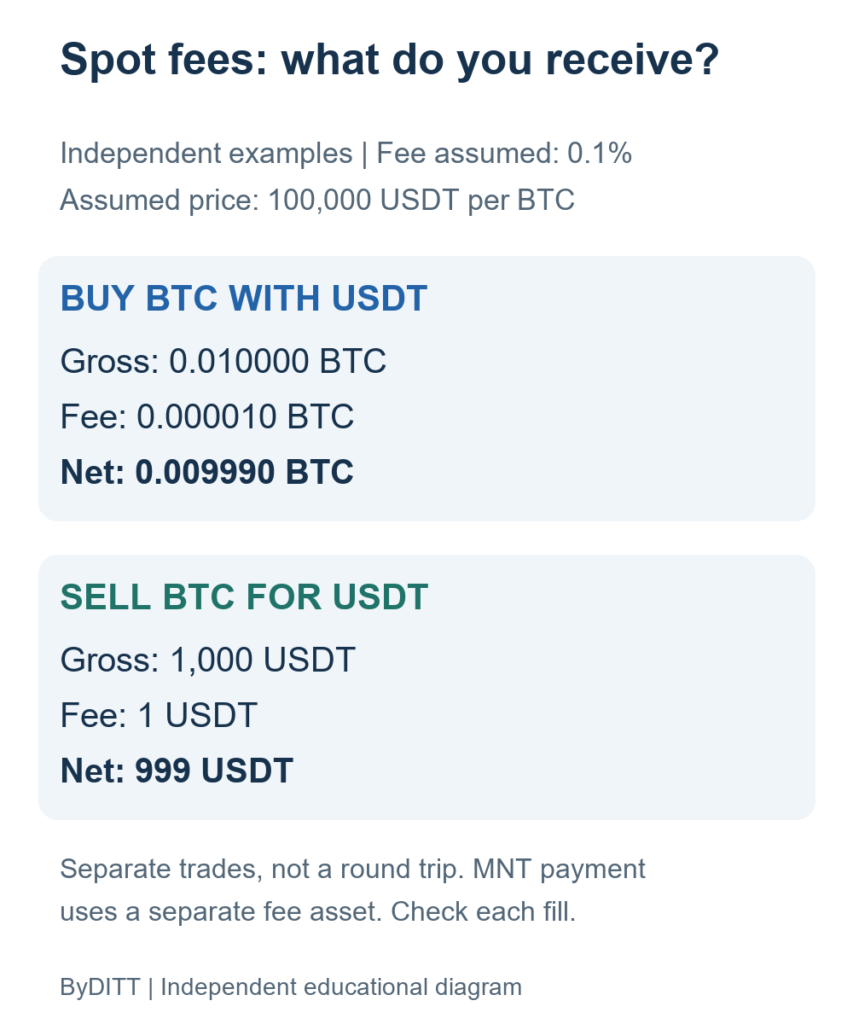
Bybit’s fee structure says actual rates can vary by region and directs users to their logged-in My Fee Rate page after identity verification. Inspect the charged fee in the trade record; do not calculate a promised net result from the trigger alone. Product, VIP status and applicable campaigns can affect account terms.
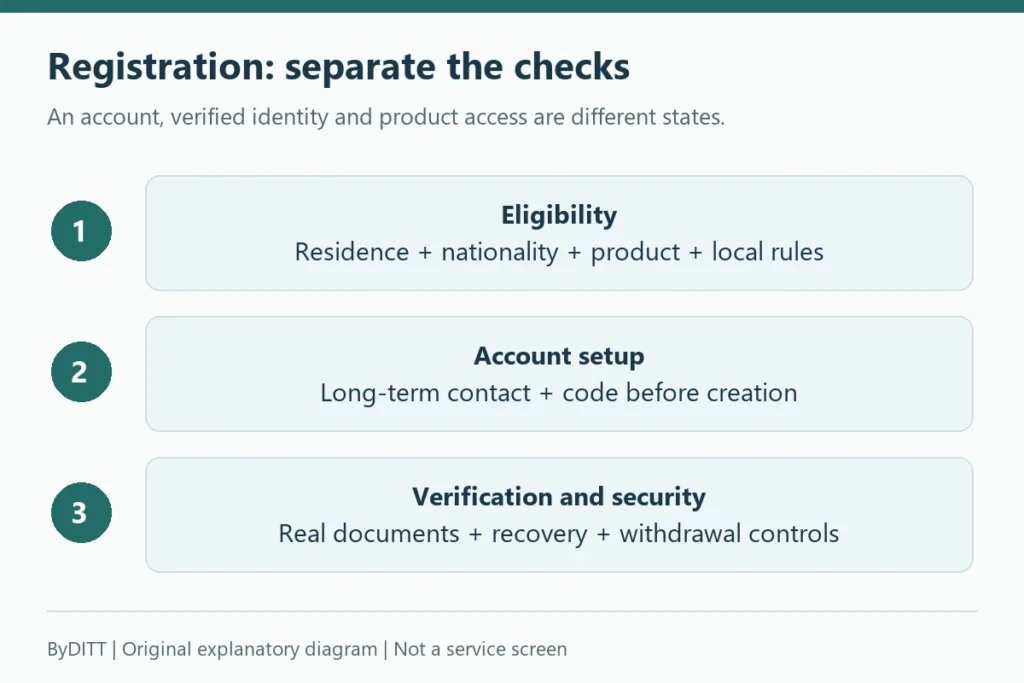
A translated guide is not permission to use a product in your country. Korean-speaking and other global readers should check the relevant account entity, residence requirements, identity verification and current service restrictions. Do not misrepresent your location. Our regional access and KYC checklist provides context, not a legal determination.
Frequently asked questions
Is a Spot trailing buy the same as closing a Futures short?
No. Bybit supports both buy and sell trailing orders for Spot, while its Futures trailing-stop feature is a closing tool for an existing position. Confirm the product before interpreting the direction.
What should I record before contacting support?
Keep the product, pair, order ID, timestamps with time zone, settings, status and actual fills. Explain the precise mismatch you observed, and use official support channels. Redact unrelated balances and personal information.
Does a trailing stop remove liquidation risk?
No. Ordinary unleveraged Spot and borrowed or leveraged products have different risks. Margin and derivatives can be liquidated; an automated order is not insurance against fast markets, execution failure or platform disruption.
Optional registration and disclosures
If you choose to register, review the official signup screen with BYBITDC. Verify the displayed code, account-specific fees, campaign terms and regional eligibility yourself. This link does not establish a fixed discount, reward or product entitlement.
Affiliate disclosure: BYDITT is an independent educational and affiliate website, not Bybit.com. We may receive compensation from eligible referrals through BYBITDC, creating a potential conflict of interest.
Risk disclosure: Crypto involves market, liquidity, slippage, custody, counterparty, technology and regulatory risks. Borrowing and derivatives add leverage and liquidation risk. You may lose capital. This article is educational, not investment, legal or tax advice.
Source review: The five official Bybit documents linked above were checked on September 16, 2026. Recheck current documentation and your account before acting; examples are BYDITT calculations, not trading recommendations.